
Air Conditioning and Regulations: The True Cost of Air Conditioning!
Every heat wave reignites the debate over air conditioning. Indeed, behind the immediate relief provided by air conditioning lies a complex issue, an environmental cost, and regulations that are tightening on several fronts at once: climate, fluorinated gases, and, more recently, persistent pollutants. For companies that operate refrigeration or air conditioning equipment, beyond political or ideological considerations, the main challenge is compliance with new regulations.
Air conditioning remains a means of adaptation—and is sometimes vital for vulnerable people facing increasingly hot summers. It is certainly one solution, but we must weigh the trade-offs.
Some thoughts and a regulatory framework:
First paradox: Cooling the interior warms the immediate exterior
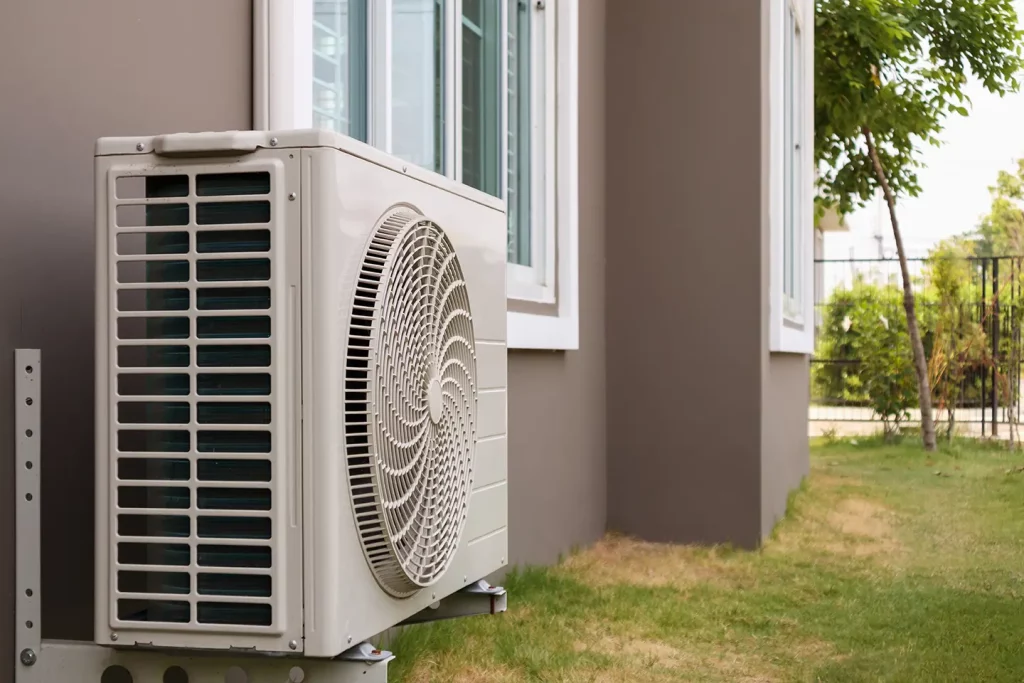
In fact, an air conditioner moves heat: it extracts it from a room and releases it outside, adding to it the heat generated by the electricity it consumes. So cooling the inside means heating the outside.
In a densely populated city, the effect is measurable and exacerbates the “urban heat island” phenomenon. During a heat wave in Paris, simulations by Météo France and the CNRS estimate that if all buildings used air conditioning to maintain a temperature of 23°C, the outdoor temperature could rise by an average of +2°C at night!
This sets off a vicious cycle: the heat released onto the street negates the nighttime cooling enjoyed by neighbors… who eventually install air conditioning themselves (not to mention the noise pollution). In short, the more we use air conditioning, the hotter it gets outside, and the more we use air conditioning. That’s why some people often describe the widespread use of air conditioning as a “false solution” in urban areas.
On a global scale, the heat directly emitted by air conditioners remains negligible: global warming is caused by the greenhouse effect, which traps solar energy—an amount of energy that is incomparably greater than the heat we produce. Air conditioning therefore impacts the global climate through two indirect channels: electricity and its carbon footprint, and the management of refrigerants.

An initial cost: electricity
An air conditioner consumes a lot of electricity. If that electricity comes from fossil fuels, it emits CO₂. In fact, the International Energy Agency ranks cooling among the leading drivers of growth in global electricity demand.
The cost of climate change varies by country.
The climate impact of a single air conditioner can vary from one to ten times depending on the type of electricity that powers it. Countries where demand for air conditioning is skyrocketing due to rising temperatures are often the ones with the most carbon-intensive power grids. For our target countries:
- Switzerland: approximately 55–60% hydropower and about one-third nuclear power, making its electricity generation among the cleanest in the world, at ~20–33 gCO₂/kWh; however, the “at the outlet” figure (including gas imports) rises to around 90 g in dry years.
- France: Approximately 65% of its electricity comes from nuclear power, supplemented by hydroelectric, wind, and solar power, resulting in ~22 gCO₂/kWh (generation, source: RTE 2024); it is one of the lowest-carbon power grids in the world.
- Tunisia: ≈ 99% natural gas, or ~450–500 gCO₂/kWh; renewables account for about 3%, but Tunisia is aiming for 35% renewables by 2030.
- Senegal: ≈ 74% fossil fuels, historically dominated by fuel oil, at ~500–600 gCO₂/kWh; a shift toward domestic natural gas is underway through the “gas-to-power” strategy ” strategy (the GTA field shared with Mauritania, first gas in late 2024, first LNG in February 2025), with solar and wind power on the rise (≈ 15% combined).
- Morocco: coal ≈ 55%, supplemented by natural gas ≈ 10% (≈ 69% fossil fuels), resulting in the highest carbon intensity, ~600–700 gCO₂/kWh; However, wind power (≈ 21%) and solar power are growing rapidly.
Consequently, the environmental impact of installing an air conditioner varies from country to country, depending on how electricity is generated.
Note: It’s also important to know that in Switzerland, the installation of an air conditioner in a private home is subject to cantonal regulations!
Pollution and Climate: Refrigerants, Pollutants
Air conditioners contain refrigerant gases that, when they leak or are not properly recycled, escape into the atmosphere and prove to be far more harmful to the climate than CO₂. The scale of the problem is staggering: according to regulatory standards, a single kilogram of HFC-134a—long the standard refrigerant in automotive air conditioning—is equivalent to more than one metric ton of CO₂. That’s roughly the equivalent of several thousand kilometers driven in a diesel SUV. 🚙
Certain related substances (CFCs, HCFCs) also deplete the ozone layer. This has led to a three-tiered regulatory framework: the Montreal Protocol (1987, ozone), the Kyoto Protocol and the Paris Agreement (greenhouse effect), and the Kigali Amendment (2016), which calls for the phased-out global phase-down of HFCs.
Refrigerants 👉 at the intersection of several regulatory frameworks: national, European, and international.
Legislation governing these substances has been in place for a long time. Over the years, the use of these highly polluting fluids has been regulated by numerous regulations:
- International agreements such as the 1987 Montreal Protocol (and its Kigali Amendment), the Kyoto Protocol, and the Paris Agreement (on greenhouse gases).
- In Europe, the F-Gas Regulation 2024/573 calls for the phased-out of these fluids and sets standards for equipment containing them. Their transport by road, meanwhile, is governed by the ADR, the international agreement on the transport of dangerous goods.
- Finally, at the national level, it is the Environmental Code—and specific regulations—that will implement these measures (depending on the country)
The traditional refrigerant used in air conditioners, R-410A (which has a global warming potential (GWP) of 2,088—more than 2,000 times that of CO₂), has been banned sinceJanuary 1, 2025, in air conditioners and heat pumpswith a charge of less than 3 kg, with phased-in deadlines extending through 2033 for other categories of equipment.
Substitutes fall into two categories:
- Synthetic fluids with low GWP: transition solutions:
- R-32 (GWP 675, which is one-third that of R-410A) and
- R-454B (GWP 466), both of which are slightly flammable (Class A2L)
- R-1234yf (GWP close to 4), which has become the standard for automotive air conditioning systems since the EU mandated that all new vehicles use a refrigerant with a GWP below 150 (MAC Directive 2006/40/EC, effective since 2017).
- Natural Refrigerants: Sustainable Solutions:
- propane (R-290, GWP 3),
- CO₂ (R-744, GWP 1),
- ammonia (R-717, GWP 0).
- The trade-off: flammability, toxicity, or high pressure—which means very stringent safety and design requirements.
The regulatory path extends far beyond R-410A. The F-Gas Regulation calls for a 79% reduction in HFC consumption between 2015 and 2030, followed by their phase-out by 2050. In between, a schedule of bans will be implemented on a device-by-device basis: starting in 2029, split systems ≤ 12 kW with a PRP ≥ 150 will be banned in new installations; in other words, R-32 itself will be phased out of standard residential air conditioning. Today’s “transition” refrigerants are therefore already doomed in the medium term.
Regulatory Break: What Is the F-Gas Regulation?
The European F-Gas Regulation aims to drastically reduce greenhouse gas emissions by phasing out fluorinated gases with high global warming potential (GWP). GWP is also known as PRG (Potentiel de Réchauffement Global) or GWP (Global Warming Potential). Its latest revision is in line with the European commitments arising from the Paris Agreement and the Kigali Amendment to the Montreal Protocol.
In Europe, this reduction is scheduled according to a specific timeline, marked by various stages. Through a mechanism that sharply reduces annual quotas, this regulation facilitates the phased-out elimination of HFCs (hydrofluorocarbons), which emit greenhouse gases, and calls for their complete phase-out by 2050.
What, exactly, does the F-Gas Regulation 2024/573 propose? What are its objectives?
At the heart of the system is the European “F-Gas” Regulation. First published in 2006 and revised in 2014, it is now in its third version with Regulation (EU) 2024/573, published on February 20, 2024, and effective as of March 11, 2024 (it repeals Regulation 517/2014). As a European regulation, it applies directly, without the need for national transposition.
Two major new features.
Its scope is first being expanded to include HFOs (hydrofluoroolefins), which have not been regulated until now, and to new sectors (the medical sector, including inhalers, and the construction sector, including insulating foams).
It then reinforces all previous requirements: reducing the amount of HFCs placed on the market, preventing emissions, certification, equipment bans, recovery, combating the trafficking of illegal refrigerants, and monitoring imports and exports.
-
Reduce the amounts of HFCs.
HFCs may only be placed on the market under quotas, which are allocated through the Commission’s F-Gas portal. In fact, as of January 1, 2026, obtaining a quota is contingent upon the payment of a fee of 3 euros (excluding tax) per metric ton of CO₂ equivalent allocated (Article 17 of the regulation). Originally scheduled for 2025, its entry into force was postponed by one year. It applies to HFCs and HFC/HFO blends, but not to pure HFOs or reclaimed fluids, which are exempt from the quota system. All of these measures have one concrete consequence: refrigerants will become scarcer and more expensive.
-
Containment and Leak Tests.
Intentional degassing is prohibited. Owners and operators must prevent leaks, repair them immediately, and periodically check for leaks. The frequency depends on the charge (in metric tons of CO₂ equivalent for HFCs, in kilograms for HFOs) and the presence of a detection system: for example, every twelve months for a charge of 5 to 50 metric tons of CO₂ equivalent without a detector, and every twenty-four months with one. These inspections now apply to HFOs as well. Exemptions apply to hermetically sealed equipment below certain thresholds (less than 10 metric tons of CO₂ equivalent for HFCs, less than 2 kilograms for HFOs, and less than 3 kilograms for residential systems). After repairing a leak, a new inspection must be conducted within 24 hours to one month. The operator must maintain a log of all service calls.
-
Labeling.
The labeling requirements, which previously applied to HFCs, now cover all fluorinated gases listed in Annexes I through III (including HFOs). Equipment in which the refrigerant has been replaced must be relabeled. The label template is specified in Implementing Regulation 2024/2174, which has been in effect since January 1, 2025.
-
Training and Certification.
Installation, maintenance, repair, decommissioning, leak testing, and recovery must be performed by certified operators and technicians. Training programs now include alternative solutions, such as so-called “natural” refrigerants (ammonia, CO₂, propane), and energy efficiency. The new certificates of competence are valid for 7 years. Those issued before the regulation took effect remain valid, but a refresher course must be completed by March 12, 2029, at the latest, and then every 7 years thereafter.
-
Marketing bans.
Annex IV sets out a timeline by type of equipment. Regarding air conditioning: plug-in portable air conditioners containing HFCs with a GWP ≥ 150 have been banned since 2020; monoblock units and other stand-alone equipment with a GWP ≥ 150 will be banned as of January 1, 2027; air-to-air split systems ≤ 12 kW with a GWP ≥ 150 will be banned as of January 1, 2029. Exemptions are available for safety reasons.
-
Maintenance and Recovery.
The regulation restricts the use of certain refrigerants for the maintenance of existing equipment: Effective January 1, 2026, gases with a GWP ≥ 2,500 are prohibited for the maintenance of existing air conditioning systems and heat pumps, unless they are recycled or reclaimed, and this restriction applies only until 2032. Finally, the owner remains responsible for the recovery of refrigerants at the end of their service life, which must be entrusted to a certified professional for recycling, regeneration, or destruction.
The HFO Trap: The “Climate Solution” Becomes a PFAS Problem
This is the most significant consequence, and the one that raises a new compliance issue. HFOs (such as R-1234yf and R-1234ze), touted as the “climate-friendly” solution thanks to their near-zero GWP, pose another problem: they are PFAS substances. As they degrade in the atmosphere, they break down into TFA (trifluoroacetic acid), an ultra-short-chain PFAS—one of those “forever chemicals.”
The numbers speak for themselves. One study estimates that the switch from HFC-134a to its replacement, HFO-1234yf, could increase the amount of TFA formed globally by a factor of 33 and raise surface concentrations in Europe by up to 250 times, assuming equivalent emissions.
And this pollutant is found in water. A study by ANSES published on December 3, 2025, detected TFA in 92% of the 627 tap water samples analyzed. Regulations are following suit: in France, TFA will be included in drinking water quality standards as of January 1, 2027 (Decree No. 2025-1287). At the European level, a proposed REACH restriction backed by five countries since 2023 targets more than 10,000 PFAS and could, eventually, include certain HFC and HFO refrigerants.

We can no longer ignore this fact: synthetic fluids reduce the environmental impact but contribute to water (and air) pollution; natural refrigerants solve both problems, but at the cost of challenging technical constraints. The issue remains complex.
A clear regulatory path has been set.
For any organization that operates refrigeration or air conditioning systems—whether in the service, industrial, logistics, agri-food, or data center sectors—these developments translate into very specific requirements:
- Plan ahead for the phase-out of high-GWP refrigerants: map your equipment fleet, identify systems using R-410A (and soon R-32), and factor the cost of transition into your investment plans—before regulatory requirements take effect and prices for quota-regulated refrigerants skyrocket.
- Compliance with F-Gas regulations: periodic leak inspections, record-keeping, use of certified operators, and reporting of quantities.
- Incorporating PFAS/TFA into monitoring efforts: an issue that intersects climate, water quality, and chemicals, with rapidly evolving French and European regulations.
Conclusion: Think Ahead
Air conditioning will remain a legitimate adaptation tool, especially when powered by carbon-free electricity and used to protect the most vulnerable. We must consider all these aspects to fully assess the overall cost of its use: locally, it contributes to urban heat island effects and has an environmental impact due to its electricity consumption (though carbon-free in some countries) and its refrigerants (for now). These same gases are now subject to three overlapping regulatory frameworks—climate, fluorinated gases, and persistent pollutants—which are becoming increasingly stringent in parallel.
It seems that the right approach hinges on three key factors: reducing demand at the source (sun protection, nighttime ventilation, thermal mass, green roofs), selecting the right equipment and fluids, and anticipating a regulatory framework that will continue to tighten. This is precisely where regulatory monitoring and compliance support make all the difference. This is precisely where Proactive support and guidance in compliance make all the difference—please feel free to contact us Novallia!
For more information:
- Regulation (EU) 2024/573 https://eur-lex.europa.eu/eli/reg/2024/573/oj
- European Commission, F-Gas Regulation https://climate.ec.europa.eu/eu-action/fluorinated-greenhouse-gases/f-gas-legislation_fr
- Ministry of Ecological Transition, Refrigerants https://www.ecologie.gouv.fr/politiques-publiques/substances-impact-climatique-fluides-frigorigenes
- ANSES, PFAS campaign in drinking water (December 3, 2025) https://www.anses.fr/fr/content/pfas-les-resultats-de-la-campagne-nationale-de-mesure-dans-leau-destinee-la-consommation
- Decree No. 2025-1287 of December 22, 2025 https://www.legifrance.gouv.fr/jorf/id/JORFTEXT000053158687